

Casino Kingdom site – A Comprehensive Guide to Registration in AU


Moving through the world of online gaming requires a reliable foundation, and for countless gamblers, the experience begins with establishing a safe account https://kingdompokies.com/. Casino Kingdom has designed its sign-up process to be both swift and transparent, removing the hassle that frequently affects digital platforms. The system ushers newcomers through a sensible sequence of steps, guaranteeing that no critical detail is missed while preventing unnecessary data collection. A well-designed sign-up flow not solely secures the platform but also safeguards the user by checking identity early. This article breaks down every stage of the process, from the first entry boxes to final verification, offering practical insights that assist players steer clear of common pitfalls. Grasping these mechanics before clicking the join button changes what could be a tedious administrative task into a seamless, five-minute exercise that focuses on protection without giving up convenience.
Comprehending the Pre-Registration Requirements
Ahead of a single field is filled, prospective users should gather specific records to prevent interruptions during the sign-up flow. Casino Kingdom stipulates that all applicants meet the legal age limit, which conforms with the jurisdiction’s strict responsible gaming laws. A government-issued identification credential, such as a passport or driver’s license, must be current and legible, as blurred scans are the primary cause of verification delays. Additionally, users require a separate email address that they actively track, because critical account alerts and promotional codes are sent exclusively through this channel. A mobile phone number is equally crucial, functioning as a secondary recovery method and a channel for two-factor authentication prompts. Finally, the residential address supplied must correspond with the documentation exactly; inconsistencies between the typed entry and the utility bill or bank statement submitted later will trigger a manual review, lengthening the approval window by several business days.
Going through the Identity Verification (KYC) Procedure
Modern legal frameworks oblige Casino Kingdom to carry out a thorough identity authentication process ahead of any withdrawal demand can be honored. The KYC portal, available from the account dashboard, asks for three distinct classes of documentation. The first is verification of identity, fulfilled by a high-resolution scan or photograph of a passport or national ID card where all four corners are clear and the text is sharp. The second category is confirmation of address, which must be a utility bill, bank statement, or government document issued within the last three months showing the name and residential address corresponding to the profile exactly. The third, often overlooked, is payment method authentication, requiring a screenshot of the e-wallet dashboard or a photo of the physical card with the middle digits obscured for safety. Uploading these documents through the encrypted portal initiates a review queue that normally resolves within twelve to forty-eight hours.
Rejections during this phase are virtually always due to needless mistakes. Blurry pictures, expired documents, or statements that present a P.O. Box instead of a physical street address will cause the compliance team asking for resubmission. To speed up the process, users should guarantee that the lighting is uniform when capturing documents, preventing glare that obscures critical data fields. The name on the identity document must be the primary name on the account; nicknames or shortened versions will not satisfy the automated cross-check. Once the status indicator moves from pending to verified, the account is fully freed, eliminating deposit restrictions and activating the withdrawal queue. Keeping current documents on file is an ongoing duty, as the platform may require re-verification periodically or when a player exceeds cumulative transaction thresholds defined by the licensing body.
Email Confirmation and Initial Login
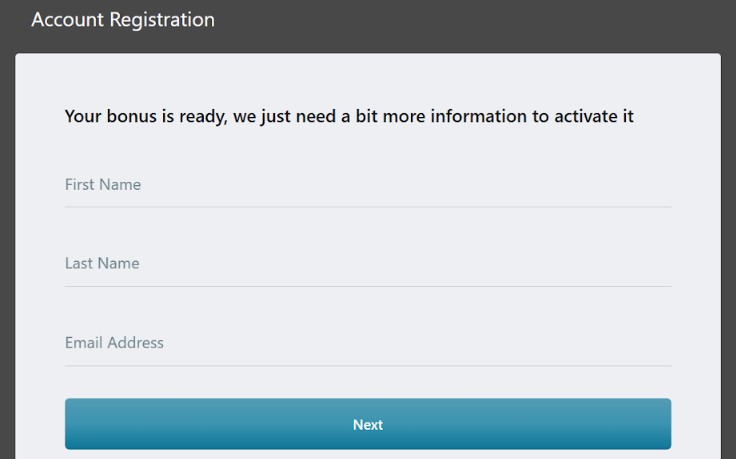
Straight after submitting the registration form, Casino Kingdom forwards an automated verification email to the address provided. This message holds a time-sensitive hyperlink that remains active for a limited window, typically twenty-four hours, to stop stale activation attempts. Clicking the link sends the user to a branded confirmation page that finishes the email binding and signals the system to cancel the initial restrictions on the account. If the message does not arrive in the primary inbox, inspecting the spam or promotions folder is the recommended first troubleshooting step. Marking the sender as a trusted contact blocks future communications from being filtered, ensuring that withdrawal notifications and bonus offers arrive at the recipient without obstruction. Upon successful confirmation, the user can perform their first login using the credentials established earlier, gaining access to the lobby but not yet to the full cashier suite.
The inaugural login experience is intended to orient newcomers without bombarding them with pop-ups. A subtle onboarding overlay may emphasize key navigation elements, such as the cashier icon, the responsible gaming tools, and the promotions hub. At this stage, the account operates under deposit limits and withdrawal holds until the Know Your Customer protocols are satisfied. Users should right away navigate to the account settings to configure security preferences, including setting up two-factor authentication via an authenticator application. This proactive measure greatly lowers the risk of unauthorized access, particularly for players who intend to store payment card details for recurring deposits. The platform also logs the IP address and device fingerprint of this first session, establishing a baseline that helps the security engine spot anomalous login attempts from unfamiliar geographic regions in the future.
Topping Up Your Account and Understanding Payment Gateways
With verification underway or finished, attention moves to the cashier interface, where Casino Kingdom aggregates a variety of payment channels tailored to local preferences. The deposit dashboard organizes options into instant transfers, card payments, and digital wallets, each displaying the minimum and maximum transaction limits transparently. Selecting a method activates a secure overlay where financial details are tokenized, meaning the raw card number is never stored on the gaming server but replaced with a cryptographic alias. Processing times depend on channel; card deposits typically reflect in the balance within seconds, while bank transfers may necessitate a brief clearing period. The platform does not levy internal fees on inbound transactions, though the user’s issuing bank might impose a cash advance charge for credit card loads, a nuance worth clarifying with the financial institution beforehand.
Before confirming the first deposit, players should visit the promotions page to evaluate whether a welcome offer aligns with their playing style. Bonus codes, if applicable, are typed in a dedicated field within the cashier rather than applied retroactively. Missing this step often causes forfeiture of the introductory package, as support teams hardly ever grant manual adjustments for oversights. The deposit flow finishes with a confirmation screen outlining the amount, the method, and the credited bonus funds, providing a clear audit trail. Responsible gaming prompts may show up at this juncture, prompting the user to set session time limits or loss thresholds before the funds become available for play. Establishing these boundaries during the funding stage embeds discipline into the routine from the very first wager, turning a reactive safety net into a proactive habit.
Comprehensive Walkthrough of the Sign-Up Form
The web-based form presented by Casino Kingdom is split into intuitive segments, each requiring a specific type of information without flooding the user. The initial screen gathers fundamental details: first name, last name, and date of birth, which are immediately cross-referenced to stop underage registrations by default. The subsequent segment shifts to contact data, instructing the entrant to provide a valid email address and a mobile number with the right country dialing code. A subtle verification button often sends a one-time code to the phone to verify ownership before the process continues. The third section covers geographic and currency selections, setting the time zone and the main monetary unit for the wallet. The last segment encourages the user to choose a unique username and a robust password that adheres to complexity requirements, usually demanding a mix of uppercase letters, digits, and special characters to strengthen the credential against brute-force attacks.
Attention to detail during this phase prevents friction later. The platform applies real-time validation, meaning fields glow red or green as data is inputted, offering instant feedback on formatting errors. For illustration, the postal code must align with the selected suburb in the database, and the system refuses mismatches without notification until corrected. Users who rush through this section often face a generic error at submission, requiring them to retrace their steps. A practical strategy involves disabling browser autofill temporarily, as cached addresses sometimes introduce outdated information that conflicts with the current verification documents. Once all fields show a green confirmation status, the applicant proceeds by clicking the final submission button, which activates the creation of the provisional account shell. At this juncture, the profile remains in a limbo state, awaiting email confirmation to activate full functionality.
Frequent Registration Pitfalls and How to Prevent Them
Even a optimized system can create obstacles when users diverge from the designated path. A common stumbling block concerns mismatched personal details, where a typo in the date of birth or a reversed digit in the address creates a permanent discrepancy that hinders future withdrawals. Correcting these errors post-registration requires contacting customer support and submitting documentary proof, a process far more burdensome than double-checking the form before submission. Another ongoing issue stems from the use of virtual private networks that route traffic through restricted jurisdictions, causing the automated compliance filters to lock the account preemptively. Disabling VPN software during sign-up and KYC uploads eliminates this trigger. The table below details the most common errors and their straightforward remedies, serving as a quick reference for a trouble-free setup.
- Typographical errors in name or address: Carefully check each field against the official ID document before clicking submit.
- Unverified email address: Review spam folders within five minutes of registration and whitelist the sender domain.
- Document glare or cropping: Record documents on a flat, dark background in natural daylight without using flash.
- VPN interference: Momentarily pause any location-masking software to allow the geolocation check to pass cleanly.
- Bonus code omission: Identify the promo field in the cashier and enter the exact code string before finalizing the deposit.
- Duplicate account creation: Never try to open a second account; instead, use the password recovery tool if access is lost.
Protection Standards and Accountable Profile Handling
Casino Kingdom integrates multiple security mechanisms around each account to establish a security wall that adjusts with new risks. Transport Layer Security encryption protects https://ouvert.canada.ca/data/dataset/?res_type=dataset&_keywords_limit=0&_res_format_limit=0&_frequency_limit=0&res_format=CSV&subject=economics_and_industry&frequency=P1Y&keywords=gaming all data in transit between the user’s browser and the server, rendering intercepted packets useless to malicious actors. On the authentication front, the platform offers biometric login on compatible mobile devices, enabling fingerprint or facial recognition to replace manual password entry for daily access. Session management protocols automatically log out idle users after a period of inactivity, minimizing exposure on shared or public computers. The security center within the account dashboard displays a log of recent login attempts, complete with IP addresses and timestamps, enabling users to audit their own access history and report anomalies immediately. This transparency promotes a collaborative security posture where the operator and the player share responsibility for the integrity of the profile.

Beyond technical defenses, the platform integrates a suite of responsible gaming controls that can be adjusted independently of customer support intervention. Deposit limits can be established on a daily, weekly, or monthly cadence, and any decrease applies instantly, while increases require a cooling-off period to prevent impulsive adjustments. Reality check pop-ups, configurable at intervals as short as thirty minutes, cover the screen to show elapsed session time and cumulative spend, grounding the player’s perception. For those seeking a more substantial break, the self-exclusion tool suspends access across all products for a chosen duration, spanning from six months to a permanent closure. Activating these features does not demand justification or interaction with a representative; the automated system processes the request immediately, emphasizing the brand’s commitment to player welfare as an integral component of the account lifecycle rather than an afterthought.